Phone delear shop business plan
| Institution | Kisii National Polytechnic |
| Course | Electrical and elect... |
| Year | 1st Year |
| Semester | Unknown |
| Posted By | MAKORI KERECHA |
| File Type | docx |
| Pages | |
| File Size | 193.05 KB |
| Views | 3757 |
| Downloads | 0 |
| Price: |
Buy Now
 Buy via
whatsapp Buy via
whatsapp
|


Description
This is a business plan for starting and running phone delear shop .
EXECUTIVE SUMMARY'S
CHAPTER ONE
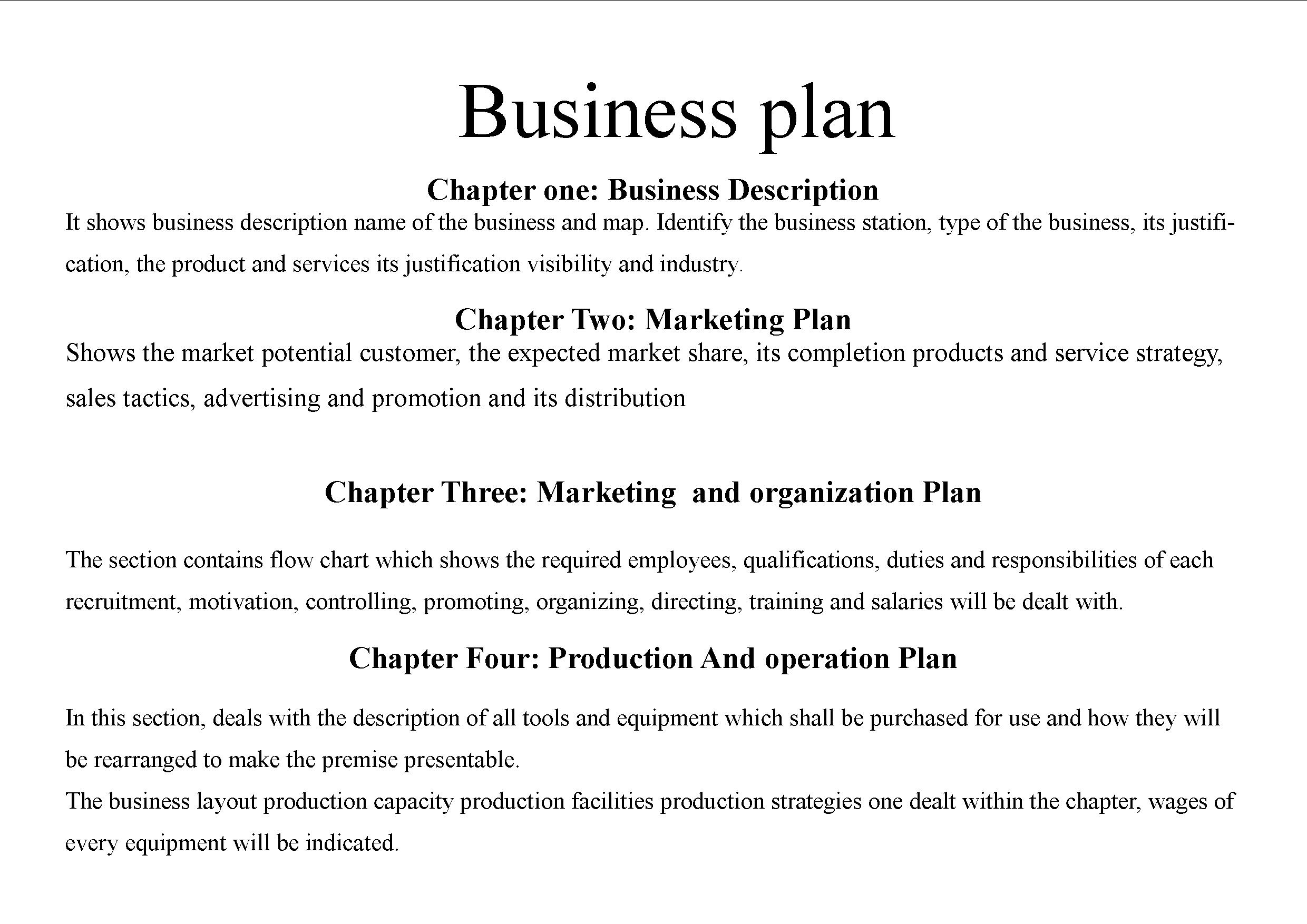
This chapter contains business description, owner’s background information, business name, business location, address, forms of ownership, type of business products and services, goals and objectives and others.
CHAPTER TWO
Here we have market plan which contains customers, domestic customers, institution, government department, market share/size, competition, promotion and advertisement and many more
CHAPTER THREE
We have organization/management plan which contains the management team, organization charts, other personnel, recruitment, training and promotion, recruitment of employees, training, remuneration and incentives, licenses, permit and by-laws
CHAPTER FOUR
It contains production facilities and capacity, production strategy, process and regulations affecting operations. The process involves the steps to be followed in producing garments especially commercial paper patterns and offering services of high standard than competitors. Besides this, it also contains expenses incurred in the business with regulation affecting all operations with the premise.
CHAPTER FIVE
Contains financial plan, pre-operational costs, cash flow statement, Performa, balance sheets, break even analysis and even others which have been indicated in table contain chapter five
The financial statement helps to compare the performance of the business with another business. The interpretation will also enable the business to compare the current performance and also predict the future.
Below is the document preview.

Prison visitor management system project report
Trending!
This research project entitled “PRISON VISITOR MANAGEMENT SYSTEM” is designed to enhance the process of visiting inmates by leveraging modern technology to streamline scheduling, identification, and monitoring of visitors.
The Specific objective of this project is to ensure strict adherence to prison visitation policies and regulations, thereby maintaining compliance and upholding the integrity of our security protocols. we are innovating our existing project by introducing a system that enhances the Prison Visitor Management System (PVMS). This system will provide timely messages to visitors, improving communication and overall efficiency within the facility.
The General objective is to improve and innovate the existing one that is written in PHP” Prison Management System”, this project considers especially visitors” Prison Visit Management System (PVMS)”.
As world growth there are large number of people and this may lead to a big number of crimes that make many inmates in prison, this provides standard of common understanding of how to develop a website that will help in visitation for families and their inmate as the prison also for their security and check-in and out.
This platform is a key feature of the system, allowing visitors to schedule their visits in advance. This reduces wait times and helps prison staff manage visitor flow more effectively. Visitors receive digital confirmations and reminders, ensuring they are well-informed about their scheduled visits. The system can also accommodate special requests and provide real-time updates on visit status, enhancing the overall visitor experience.
The system also maintains accurate records of all visits, which is crucial for security and compliance purposes. It provides real-time data and analytics, helping prison authorities monitor visitor patterns and identify any potential security threats. This data-driven approach allows for better decision-making and enhances the overall safety of the facility. The system’s ability to generate detailed reports ensures transparency and accountability in the visitation process.
Overall, the prison visitor management system represents a significant advancement in correctional facility operations. By leveraging modern technology and maintaining traditional security measures, it enhances efficiency and provides a better experience for visitors. This system not only benefits the prison administration by reducing administrative workload but also ensures that the visitation process is smooth, secure, and well-organized, ultimately contributing to the overall safety and well-being of the prison community.
3242 Views
0 Downloads
2.16 MB
Sales management system project report
Trending!
This project is a practical part of the Business Computing and Information Technology course that focuses on gaining real life and hands-on experience on fully working Systems. The research was conducted at Nawab Asian Bistro Restaurant in Kisii Town. This research project is about designing a management system for Restaurant Sales. The study is based on the main objective of; the Design, Documentation and Implementation of sales management system. Therefore, the chapter one explains the background of study, problem statement, purpose of the study, objectives of the study, scope and the significance of the study. The methodology part which is chapter three explains and illustrates how the researcher obtained information that helped in developing the system and defines how researcher designed and implements the proposed system. Information was obtained through the various research methods. This chapter provides a description of the different techniques that were employed not only to understand the business process but also to provide a foundation for developing the proposed sales management system for manages sales records and perform task for sales anywhere, anytime. The designer was able to study how work is done with the current system and clearly identify its weaknesses, and find out the requirements for proposed system.After the system implementation, accurate records are got, no likelihood of data errors, there is real time access data and unlimited User Access then conclusion and recommendations are stated according to the study.
3355 Views
0 Downloads
612.11 KB
Smart car booking and payment system project report
Trending!
Finding a suitable parking space in urban areas, particularly where the number of cars is high, can be quite stressful for drivers. This difficulty is mainly due to the lack of information about parking space availability. Consequently, drivers spend excessive time and fuel searching for parking, which contributes to traffic congestion and inappropriate parking practices. In Kisii County, the current parking system includes outdoor parking managed by Kisii Veterans Cooperative Service (KVCS) and indoor parking controlled by building owners. Despite these two categories, drivers still struggle to find available spaces, especially during rush hours, leading to increased traffic and inappropriate parking. to address this problem, I developed a Web application combined with a NodeMCU Microcontroller, termed the "Smart Car Parking Booking and Payment System." This system aims to help drivers find unoccKNPed parking spaces more efficiently, thus reducing the time and fuel spent searching for parking, alleviating traffic congestion, and minimizing inappropriate parking. Additionally, it aids parking space owners in monitoring and managing available spaces.
The Smart Car Parking Booking and Payment System integrates various components, including RFID Readers, which scan RFID cards containing drivers' information, and sensors to detect available parking spaces. The data is transferred to a MySQL server via NodeMCU and displayed to users through a web interface accessible from anywhere or an LCD screen near the parking area. This facilitates easy and efficient location of available parking spaces.by reduce the time and fuel consumed by drivers searching for parking spaces, alleviate traffic congestion caused by cars circulating in search of parking, minimize inappropriate parking practices. And provide real-time monitoring and management of parking spaces for owners. The system was developed using an Agile software development methodology, emphasizing iterative progress through the stages of requirement gathering, design, implementation, testing, and release. Data collection techniques included user surveys and observation of current parking practices. The system design incorporated both hardware (NodeMCU, RFID readers, sensors) and software (web application, MySQL database) components. The Smart Car Parking Booking and Payment System presents a significant advancement in addressing parking challenges in urban areas, promoting efficient use of parking spaces, and contributing to smoother traffic flow and reduced congestion.
3270 Views
0 Downloads
1.84 MB
Online student timetabling management system project report
Trending!
Lecture timetabling is a very important process in any educational institution. It is an open-ended program in which courses must be arranged around a set of time slot ’T’ and remains so that some constraints are satisfied. It constitutes a class of difficult-to-solve optimization problems that lacks analytical solution method. Data gathering on the current system was analysed to create a requirement definition for the improved timetable system. Literature review was carried out to search the best approach that can help to solve the problem in the timetable system. Genetic Algorithm has been implemented in the Timetable Management System. This is because Genetic Algorithm is able to produce a feasible timetable system. Java, XML and PHP programming languages were used in developing the solution. MySQL database was used as the back-end for the solution. The front-end solution will be implemented in an android mobile operating system for easier accessibility and proximity to users.
3476 Views
0 Downloads
801 KB
Online student clearance system project report
Trending!
The online clearance system is an internet-based study initiative that will help facilitate the queuing system in the clearance process of the Kisii University . The online clearance system can provide an efficient handling of information that is very easy for the university to use since it is internet-based and can be viewed from anywhere and at any time. The computer-based architecture in this project was introduced using the Phyton programming language, Text Editor, Django and the software database as sqlite. The program created would act as a more effective and productive way of clearing students, eliminating all types of delay and tension, as well as helping you to understand the process involved, as well as how to do your online clearance. This research work uses the compilation of data from the university, materials and the program has been designed to accomplish the project objective efficiently.
3281 Views
0 Downloads
2.73 MB
Online tax management system project report
Trending!
The researcher conducted the study to develop an integrated taxi management information system model for Kisii taxi owners and drivers association (KATODA) The main objective of this research was to design a model of an integrated taxi management information system model for Kisii taxi owners and drivers association. To fulfill that objective, the researcher carried out requirements gathering and analysis to obtain the functional and nonfunctional requirements for the system.
An interview method was used with the help of interview guides to gather data from the respondents and content analysis was used to analyze the qualitative data and requirements needed for the designing of the model where noted. The researcher designed the model using UML modeling tool (Microsoft Visio) and MySQL an open source Relational Database Management System. The integrated management information system model shows how the operators in the Kisii taxi owners and drivers association register taxis and taxi drivers for each vehicle. The operators also manage income and expenditure within the association.
3150 Views
0 Downloads
1.62 MB
Traffic check out information management system project report
Trending!
The Traffic Check Out Information Management System is designed to address the challenges faced by law enforcement agencies in managing traffic violations effectively. Traditional methods of handling traffic offenses are characterized by manual processes, paper-based records, and inefficient data management, resulting in errors, delays, and lack of transparency. These limitations hinder timely resolution of violations and reduce overall compliance with traffic regulations. The primary objective of this study is to develop an integrated digital platform that automates traffic violation management, from recording offenses to processing fines and generating reports, ensuring a seamless and accurate system.
The proposed system includes three main modules: Admin, Traffic Police, and User (Offender). The Admin module enables management of police stations, traffic police personnel, and a comprehensive overview of challan reports and statuses. The Traffic Police module allows officers to file new challans, track pending violations, and generate individual reports. The *User (Offender) module provides offenders the ability to view their violation history, pay fines, and access real-time updates on challan status. This integration ensures each role has access to functionalities tailored to their needs, promoting efficient coordination and data accuracy.
The methodology involves system development through PHP and MySQL for the backend, utilizing HTML, CSS, and JavaScript for the frontend. System analysis and design techniques were employed to ensure that user requirements are met, followed by coding, testing, and validation of the system. The data for this research was collected through interviews and observations of current traffic management practices to identify gaps and areas for improvement.
The findings indicate that the implementation of the Traffic Check Out Information Management System significantly reduces manual workload, accelerates fine processing times, and enhances transparency between law enforcement and offenders. It also improves data accuracy by eliminating redundancy and errors inherent in manual systems. In conclusion, the system offers a comprehensive and efficient solution for managing traffic violations, with features like real-time tracking, automated reporting, and user-friendly interfaces that cater to various stakeholders. Its scalability and adaptability make it an ideal tool for modernizing traffic management systems in diverse environments, contributing to improved road safety and regulatory compliance.
3398 Views
0 Downloads
1.89 MB
Waste collection management system project report
Trending!
The is a well-known fact that, a good Company performing a certain service in a way that satisfies its customer’s needs, a customer who believes the company truly cares about their wellbeing is likely to be more loyal to that company. A company with high services quality always responds to customer communication as soon as possible which can often indicate the value a company place on customer satisfaction
In that light we would like to acknowledge the effort our companies put in training the households unity and to put effort in being the ones that solves their problems according to what they need.
And with that belief in my hearts that I looked at certain challenges and problems I can find solutions for in my society I found that there is a problem of the payment of the money in domestic waste collection, household are required to pay for services, and the private sector are required to collect the waste from the household house. Private sector collects the money in hand(cash). And the resident has no way to ask for emergency service from the company.
It is why I thought of building a system that would solve the two problems at once, it would help the resident, to pay the money they are required and also help the administrative of waste collection companies to pass announcements to the citizens via SMS on their mobile phones, and would be efficient because by statistics like 73% population in Rwandans have a mobile phone so there would be no miscommunication any more.
And if the system is used, I would encourage the companies in charges of cleaning to use it because not only will it help in building and making the society a good living place, but also in unifying the society as it is known that the key to unity is good communication
And I would also like to assure that I will try to make the system user friendly and that it will be used without any complications, with the help of the knowledge I have acquired.
3228 Views
0 Downloads
646.41 KB
Waste pick up information management system project report
Trending!
Waste Pickup management is an essential service in urban environments, where efficient and effective handling of waste directly contributes to public health and environmental sustainability. This project presents the design and development of a Waste Pickup Information Management System for COCCEN Ltd, a waste management company in Kenya. The system is developed to streamline waste collection processes, improve communication between clients and service providers, and ensure better resource allocation through a digital platform.
The system is designed as a web-based application using the Waterfall development model and incorporates three distinct user roles: Admin, Client, and Driver. The Admin role manages the overall system, including user registration and Scheduring tasks to drivers. The Client role allows customers to request waste collection services, and track their requests. The Driver role provides drivers with real-time information on collection requests and enables them to update the system after each service.
Technologies used for the system include PHP for the backend, and HTML, CSS, and JavaScipt for the frontend, ensuring responsiveness and user-friendly interaction across devices. The system is expected to enhance operational efficiency, reduce errors, and promote better client satisfaction through streamlined information management and service delivery.
The project emphasizes the need for digital solutions in waste management, providing COCCEN Ltd with a scalable system that can adapt to future growth and further technological integration.
3299 Views
0 Downloads
487.48 KB
Alcohol Detection Driver System- electrical telecommunication option
Trending!
' is built and put into use to track drivers' blood alcohol content in real time, with the goal of improving road safety and preventing drunk driving in Kenya’s public transportation system. This system, which was created especially for the particular requirements of Kenya’s public transportation vehicles, combines sensors technology with clever control mechanisms to identify the presence of alcohol in a driver's breath. When the system detects alcohol concentrations above a set threshold, it sets off a sequence of safety measures, which may include warning the driver and maybe turning off the ignition to keep the car from running. The heart of the device is a highly sensitive alcohol sensor that is positioned carefully to guarantee reliable and consistent readings, especially when using public transportation. The system analyzes the sensor data in conjunction with a microcontroller unit to make judgments instantly depending on the amount of alcohol detected. The implementation makes sure that drivers are notified of their status in a clear and timely manner by including user-friendly interfaces for alarm notifications and system feedback. The danger of alcohol-related accidents within Kenya’s public transportation system can be greatly decreased by using this alcohol detection system, which will help make the country's roads safer and potentially save lives. Because of its design, which places a high priority on dependability, usability, and quick reaction, the system is a workable option for actual usage in the nation's transportation sector. In addition, the incorporation of this system into public transportation vehicles is a proactive measure to encourage safe driving practices and improve public safety throughout Kenya.
3292 Views
0 Downloads
463.62 KB