BIT 2112: Software Development
| Institution | Jomo Kenyatta University of Science and Technology |
| Course | Information Technol... |
| Year | 1st Year |
| Semester | Unknown |
| Posted By | Jeff Odhiambo |
| File Type | doc |
| Pages | |
| File Size | 49 KB |
| Views | 4060 |
| Downloads | 0 |
| Price: |
Buy Now
 Buy via
whatsapp Buy via
whatsapp
|


Description
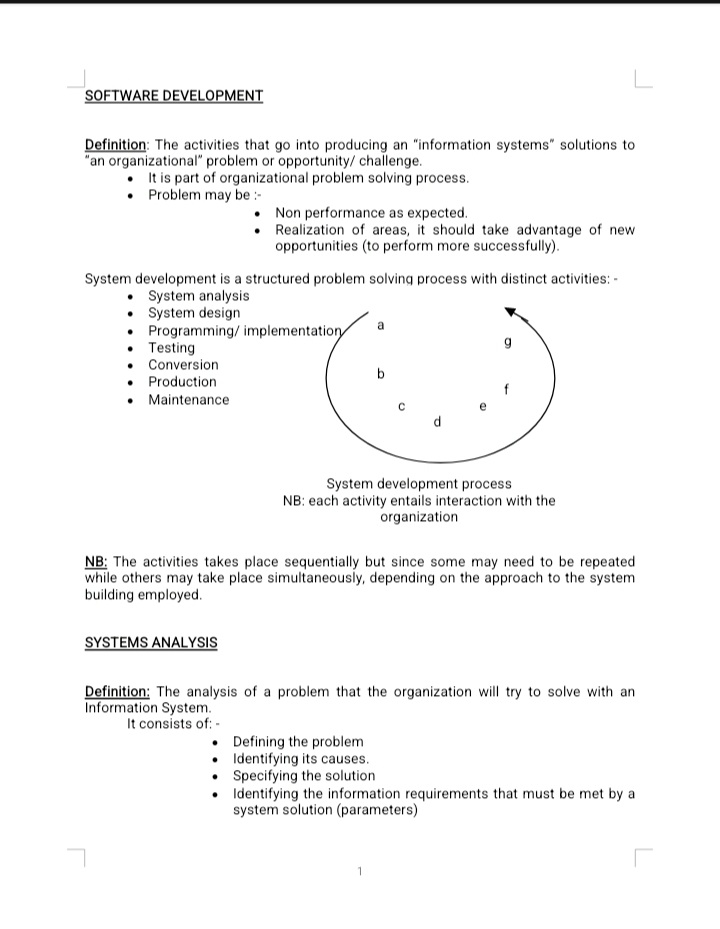
Software development is the process of designing, creating, testing, and maintaining software applications. It involves several stages.
Below is the document preview.

Project Scope Management
Trending!
Project Scope Management ensures that a project includes all the necessary work—and only the necessary work—to achieve its objectives. It involves defining, documenting, and controlling project scope to prevent scope creep, ensuring that deliverables align with stakeholder expectations. The process includes scope planning, scope definition, Work Breakdown Structure (WBS) creation, scope verification, and scope control. Effective scope management enhances project efficiency, minimizes risks, and ensures that resources are allocated appropriately to meet project goals within time and budget constraints.
3893 Views
0 Downloads
989.64 KB
Introduction to Project Management
Introduction to Project Management provides an overview of the principles, methodologies, and best practices for successfully initiating, planning, executing, monitoring, and closing projects. It covers key concepts such as project scope, time, cost, quality, risk management, and stakeholder communication. The course or subject helps individuals develop essential skills in leadership, problem-solving, and decision-making while utilizing project management tools and frameworks like Agile, Waterfall, and Scrum. By understanding these fundamentals, professionals can efficiently manage resources, meet deadlines, and achieve project objectives in various industries.
438 Views
0 Downloads
579.76 KB
Project Cost Management
Trending!
Project Cost Management is the process of planning, estimating, budgeting, financing, funding, managing, and controlling costs to ensure a project is completed within the approved budget. It involves three key processes: cost estimation (predicting financial resources needed), cost budgeting (allocating funds to project activities), and cost control (monitoring expenditures and making adjustments to prevent overruns). Effective cost management helps maintain financial efficiency, maximizes resource utilization, and ensures project success while meeting stakeholder expectations.
3284 Views
0 Downloads
463.1 KB
Project Quality Management
Trending!
Project Quality Management ensures that a project meets its defined quality standards and stakeholder expectations by implementing quality planning, assurance, and control processes. It involves identifying quality requirements, establishing quality metrics, and continuously monitoring project deliverables to prevent defects and improve performance. By integrating quality management throughout the project lifecycle, organizations can enhance efficiency, reduce costs, and increase customer satisfaction. Effective project quality management relies on industry best practices, compliance with standards, and proactive risk management to achieve successful project outcomes.
3316 Views
0 Downloads
712.2 KB
Project Time Management
Trending!
Project Time Management is the process of planning, scheduling, monitoring, and controlling time-related aspects of a project to ensure timely completion. It involves defining activities, sequencing tasks, estimating durations, allocating resources, and developing a project schedule. Effective time management helps prevent delays, optimizes workflow, and ensures that project milestones and deadlines are met. Key components include techniques like Critical Path Method (CPM), Gantt charts, and time-tracking tools. By proactively managing time, project managers can mitigate risks, improve efficiency, and enhance overall project success.
3668 Views
0 Downloads
750.75 KB
Information System Audit course outline
Trending!
The Information System Audit course provides an in-depth understanding of auditing principles, methodologies, and best practices for evaluating IT systems' security, reliability, and compliance. Topics include IT governance, risk management, internal controls, audit planning, data integrity, cybersecurity, regulatory frameworks, and business continuity planning. Students will learn to assess information systems for vulnerabilities, ensure data protection, and align IT processes with organizational objectives. The course covers key audit techniques, such as risk-based auditing, evidence collection, and reporting, preparing students for roles in IT auditing, compliance, and information security management.
3267 Views
0 Downloads
31.5 KB
Information Security Auditing
Information Security Auditing is the process of evaluating an organization's information systems, policies, and controls to ensure the protection of sensitive data and compliance with relevant standards and regulations. It involves assessing risks, identifying vulnerabilities, and reviewing the effectiveness of security measures, such as encryption, access controls, and firewalls. Auditors also analyze how well an organization adheres to established security frameworks, such as ISO/IEC 27001 or NIST, and provide recommendations for improvements to safeguard against cyber threats, data breaches, and unauthorized access. The goal is to enhance the overall security posture and reduce potential liabilities.
24 Pages
424 Views
0 Downloads
1.1 MB
IT audit process
Trending!
The IT audit process evaluates an organization's information systems, infrastructure, and controls to ensure security, efficiency, and compliance with regulations. It typically involves planning, risk assessment, testing, and reporting. Auditors examine system access controls, data integrity, cybersecurity measures, and adherence to policies. They use tools to identify vulnerabilities, assess disaster recovery plans, and review software compliance. The findings are documented in a report with recommendations to improve IT governance, mitigate risks, and enhance operational efficiency. Regular IT audits help organizations maintain security, prevent data breaches, and align with industry standards.
20 Pages
3996 Views
0 Downloads
409.47 KB
Information Security Auditing 2
Trending!
Information Security Auditing is the process of systematically evaluating an organization's information systems, policies, and controls to ensure the confidentiality, integrity, and availability of data. It involves assessing compliance with security standards, identifying vulnerabilities, and recommending improvements to mitigate risks. Security audits can be internal or external and typically include reviewing access controls, network security, data protection measures, and incident response plans. By conducting regular audits, organizations can enhance their cybersecurity posture, prevent data breaches, and ensure regulatory compliance.
67 Pages
3393 Views
0 Downloads
2.76 MB
Computer Misuse and crime
Trending!
Computer misuse and crime refer to illegal activities involving computers, networks, or digital systems to commit offenses such as hacking, fraud, identity theft, and malware distribution. These crimes exploit vulnerabilities in technology for unauthorized access, data breaches, financial theft, or disruption of services. Common examples include phishing attacks, ransomware, and cyberstalking. Governments and organizations implement cybersecurity measures and legal frameworks, such as the Computer Misuse Act, to prevent and penalize these offenses, ensuring digital safety and integrity.
3394 Views
0 Downloads
62.5 KB